Sump Pump Troubleshooting: Keep Your Basement Dry Year-Round
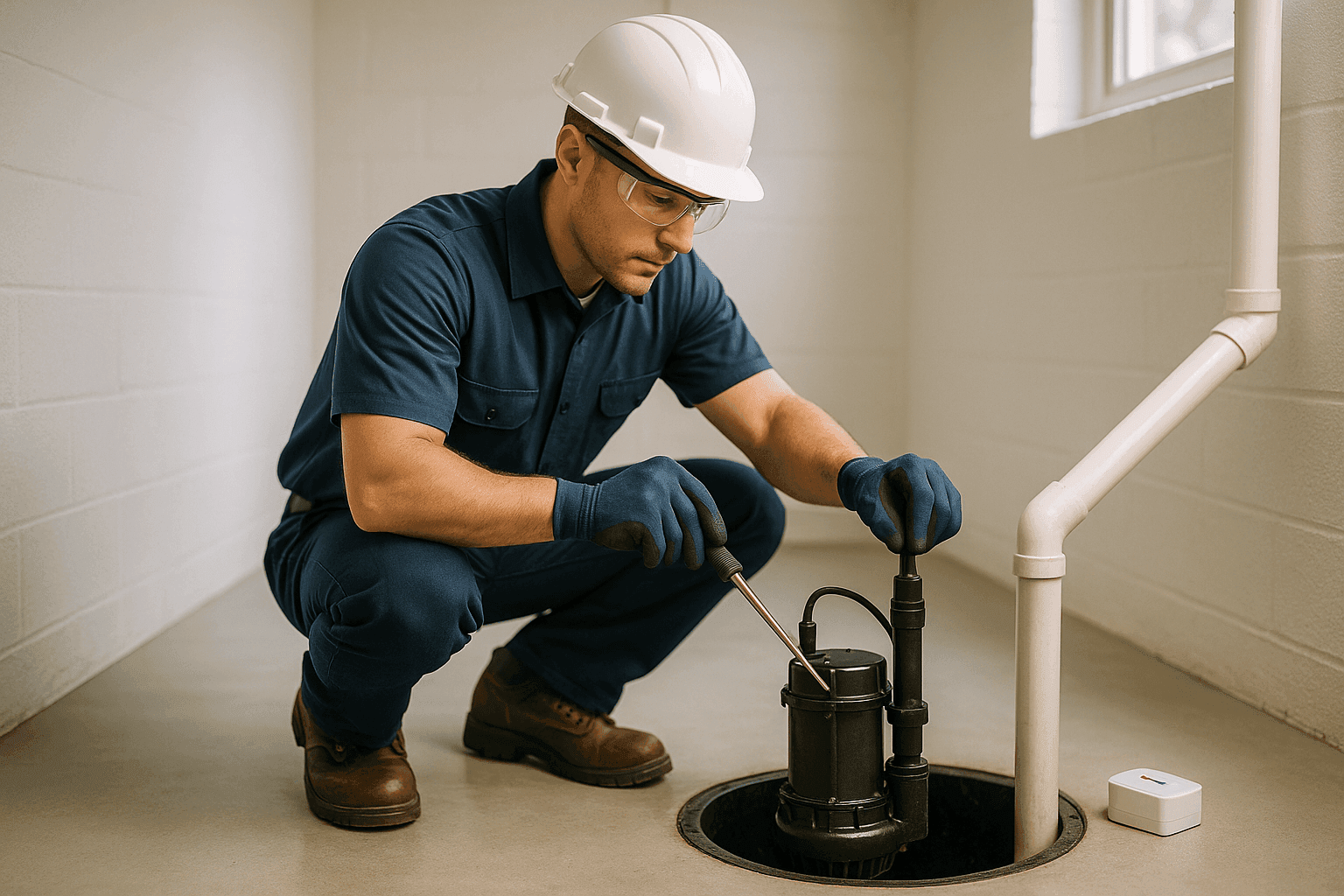
When heavy rain falls or snow melts all at once, your basement shouldn’t feel like a swimming pool. But for many homeowners, water finds a way in—through the cracks, the floor seams, even straight up from the ground. That’s when your sump pump turns from a quiet guardian to your basement’s unsung hero.
But what happens when your sump pump hesitates, sputters, or just sits there? Water damage can hit fast, costing you time, money, and peace of mind. At First Option Plumbing, we know the signs, the fixes, and how to keep your home dry—no matter the season.
How Sump Pumps Work 🛠️
Picture a safety net for your basement. Sump pumps live in a pit, usually tucked away in a corner where water collects. When the water level rises, a float switch triggers the pump. It whirs to life, sending water out and away from your foundation, usually through a discharge pipe leading to your yard or storm drain.
If it works right, you rarely notice. If it fails, you’ll notice fast.
Key Components
- Sump pit: The basin where water gathers.
- Pump unit: Sucks up water and pushes it outside.
- Float switch: Like a lifeguard’s whistle, it signals the pump when to start or stop.
- Discharge pipe: The escape route for water.
Most residential systems use submersible or pedestal pumps. Both have pros and cons, but the goal is the same—keep your basement dry.
Signs of Trouble
Sump pumps don’t send warning emails. But they do drop hints. Look for these red flags:
- Strange noises: Grinding, rattling, or excessive humming.
- Frequent cycling: Turns on and off too often, even when it’s dry.
- Runs but doesn’t pump: Motor’s working, water’s not moving.
- Stuck float: Pump doesn’t start, even as water rises.
- Visible rust or corrosion: On pump, pit, or discharge line.
- Odors: Musty or foul smells can indicate mold or stagnant water.
- Water where it shouldn’t be: Puddles, damp walls, or a soaked carpet.
Ignoring these signs can let minor issues become big emergencies. Fast action—sometimes a quick DIY step—can make all the difference.
DIY Checks and Fixes
If you’re comfortable, there are a few things you can check before calling emergency plumbing services:
Quick Safety Checklist 🔌
- Unplug before touching: Electricity and water never mix.
- Check the power: Make sure the pump is plugged in and the breaker hasn’t tripped.
- Inspect the pit: Remove debris, gravel, or toys (yes, it happens).
- Test the float: Pour a bucket of water into the pit. The float should rise and trigger the pump.
- Examine the discharge line: Outside, confirm water is flowing freely—not blocked by ice, mud, or leaves.
If the pump still won’t run, don’t force it. Repeated restarts can burn out the motor or trip your GFCI outlet.
Simple Fixes
- Reset the power: Sometimes, it’s just a tripped breaker.
- Realign the float: If stuck, gently reposition it. Avoid bending or breaking the arm.
- Clear the vent hole: A small hole near the discharge pipe may be clogged.
- Clean the pump intake: Mud or small stones can block the inlet.
If these don’t work, it’s time to call a pro. Don’t risk a flooded basement or electrical hazard.
When to Replace Your Sump Pump
Every appliance has a shelf life. For sump pumps, it’s often 7–10 years—sometimes less if they’re working overtime during wet seasons.
Consider replacement if:
- The pump is older than eight years.
- Repairs cost close to a new unit.
- You’ve had several failures or near-floods.
- Visible corrosion or cracks in the housing.
- It can’t keep up with heavy rain or snowmelt.
Replacement is an investment in flood risk reduction and peace of mind.
Flood Prevention Tips
Basement water worries don’t need to keep you up at night. Try these practical steps:
- Test your sump pump every season: Especially before spring rains or winter thaws.
- Install a battery backup: Power outages follow big storms. A backup keeps the pump running.
- Add a water alarm: Alerts you to rising water before damage spreads.
- Maintain gutters and downspouts: Keep water away from your foundation.
- Check for proper grading: Your yard should slope away from the house.
- Schedule annual plumbing inspections: Many issues hide out of sight.
For code and safety guidelines, reference your local building department or the International Association of Certified Home Inspectors (InterNACHI).
Emergency Plumbing: When Fast Action Counts
Some situations call for immediate help. Know when to call First Option Plumbing for emergency plumbing services:
- Pump failure during a storm: Water rising fast? Don’t wait.
- Flooded basement: Even standing water is an emergency.
- Tripped breakers that won’t reset: Electrical safety first.
- Strange smells or sparks: Could signal a short or fire hazard.
Our team is ready to respond—day or night, rain or shine.
Costs & Time Factors
Pricing varies by situation, but here’s what to expect:
- Service calls: Most repairs or diagnostics take an hour or two.
- Part replacements: Simple fixes (like a float switch) cost less than full pump replacement.
- Full replacement: Usually 2–4 hours for install, depending on pit access and discharge routing.
- Battery backup installation: Adds time and materials but is worth the investment during power outages.
Remember, early action is almost always less costly than repairing flood damage.
Local and Seasonal Considerations 🌧️
Some regions face flooding from spring downpours, others from rapid snowmelt. In older neighborhoods, clay soils and aging infrastructure can worsen the risk. Know your home’s history and local weather patterns—and make sump pump checks part of your seasonal routine.
If you live in a low-lying area, near rivers, or in a city with frequent water main breaks, a reliable sump pump is your best defense.
Frequently Asked Questions
How often should I test my sump pump?
At least once every three months, and before any forecasted heavy rain or thaw.
Can I install a sump pump myself?
Some homeowners with plumbing experience do, but mistakes can lead to flooding or code violations. It’s safer to call a professional.
Why does my pump run constantly?
Possible causes include a stuck switch, excessive groundwater, or a failing check valve.
Do I need a battery backup?
If your area experiences power outages during storms, a backup system is highly recommended to prevent basement flooding.
Closing Thoughts
Your sump pump is a behind-the-scenes workhorse. Don’t let neglect turn it into a silent liability. A little attention today can save you from big headaches tomorrow.
Call First Option Plumbing now — or reach us anytime at 877-748-7505 .