Sewer Line Problems: Early Warning Signs Every Homeowner Should Know
Is your nose picking up odd whiffs in the basement? Are your drains moving slower than morning traffic? Sewer line problems rarely make a grand entrance—they creep in quietly, waiting to turn a small annoyance into a full-blown emergency. At First Option Plumbing, we see it every day. The homes where quick action would have saved weeks of disruption and thousands in repairs.
Spotting sewer trouble early isn’t just smart. It keeps your home safe, your wallet healthier, and your stress levels down. Here’s what every homeowner should watch for—and how our licensed, seasoned technicians at First Option Plumbing tackle these headaches.
What Causes Sewer Line Issues? 🌳
Sewer lines are like the arteries of your home. When they clog, crack, or collapse, everything backs up—literally. But what sets these problems in motion?
- Tree Roots: In older neighborhoods, big trees mean big roots. These roots chase moisture and can sneak into tiny pipe cracks, slowly prying them apart.
- Aging Pipes: Many homes still rely on clay, cast iron, or Orangeburg pipes—materials that can fail after decades underground.
- Grease and Debris: Pouring fats, oils, and wipes down the drain is like feeding your pipes glue and rope. Over time, the mess piles up.
- Shifting Soil: Heavy rains, drought, or even nearby construction can nudge pipes out of alignment or collapse sections.
- Corrosion: Especially in metal pipes, years of water and waste can thin pipe walls until they finally give way.
Living in an area with mature landscaping or homes built before 1980? Your risk goes up. Even the best-maintained systems can be vulnerable with age and changing seasons.
Early Signs: What to Watch (and Smell) For
Problems rarely start with geysers in the yard. Most sewer line issues begin with subtle hints:
- Slow Drains: One slow sink can be a clog. But if sinks, tubs, and toilets across your home start emptying slowly, the main line could be struggling.
- Bad Smells: That rotten egg or musty odor? It’s sewer gas—and it means waste isn’t moving the way it should.
- Gurgling Sounds: Drains that bubble or toilets that burp after flushing are telling you air is trapped where it shouldn’t be.
- Changes in the Yard: Is one patch of lawn suddenly lush, bright green, or always damp? Sewer leaks fertilize grass and keep the soil wet.
- Pest Surges: Rats and roaches love broken sewer lines. A sudden crawlspace invasion can be a sign.
Think of these as your home’s warning lights. The sooner you notice, the better your odds of a simple fix.
How Sewer Line Inspections Work (Camera Scopes) 🎥
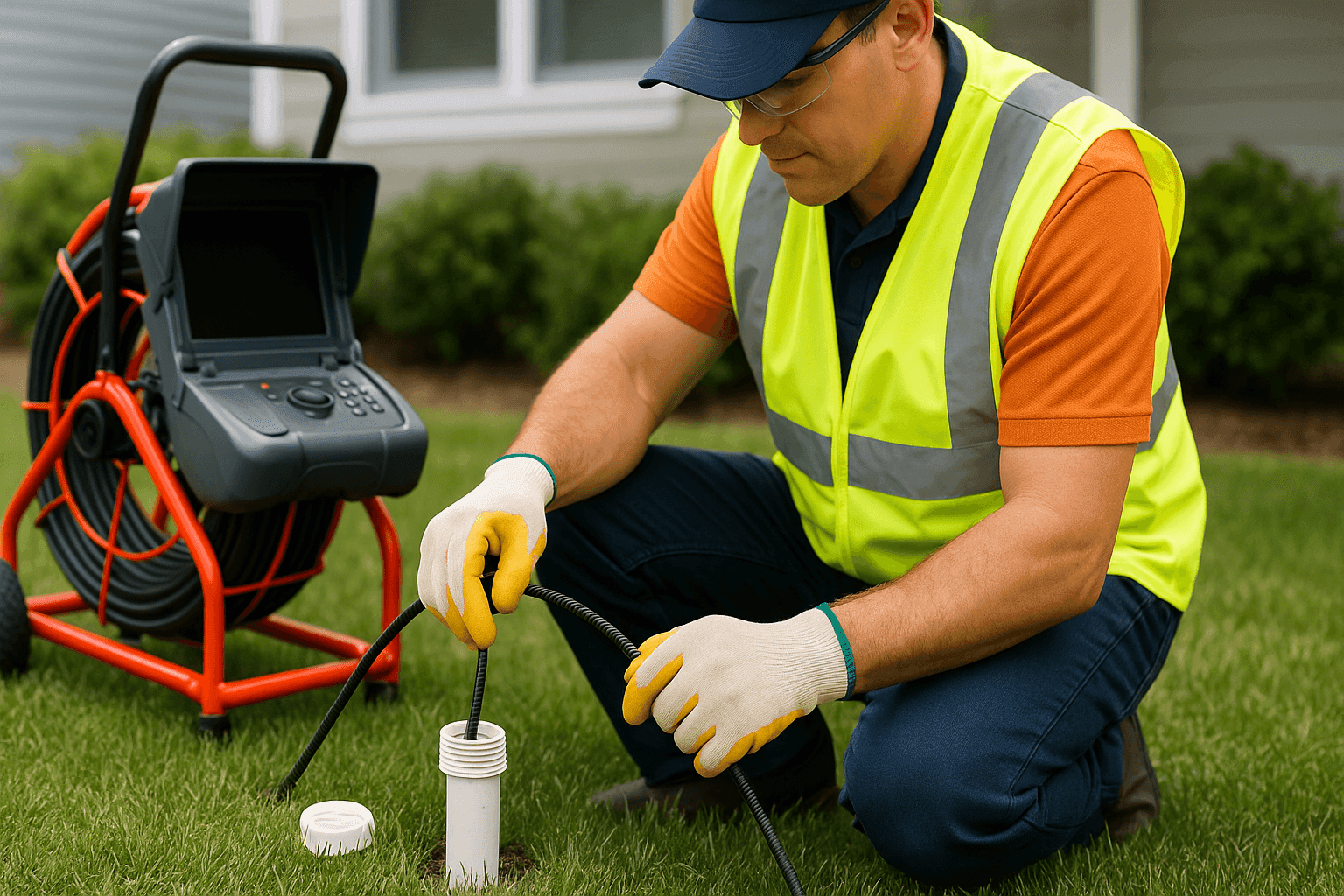
When the warning signs show up, a professional inspection is the next smart move. Here’s how First Option Plumbing gets to the root of the issue—without digging up your entire yard.
- Cleanout Access: Our technicians locate the nearest cleanout—a capped pipe that provides a direct path into your main sewer line.
- Camera Insertion: We use a flexible, waterproof camera on a long cable. It’s like sending a mini-submarine down your pipes.
- Live Video Feed: The camera sends real-time video to a monitor. We look for root invasions, cracks, collapsed sections, and buildup.
- Precise Diagnosis: The video lets us pinpoint the exact location and cause of the trouble—no guesswork, no unnecessary digging.
- Code Compliance: We follow all state and local plumbing codes, as well as safety guidelines from the International Plumbing Code.
This process means less mess, faster answers, and repairs tailored to what’s actually wrong—not just what “might” be.
Repair vs. Replacement: What’s Right for You?
Once the problem’s found, what happens next? Not every sewer issue means a full replacement. Here’s how we help homeowners decide:
- Minor Cracks or Clogs: These are often repairable with pipe relining, patching, or thorough drain cleaning near you.
- Extensive Root Intrusion: If roots have caused serious damage, sections may need to be cut out and replaced.
- Collapsed or Bellied Pipes: When the pipe has lost its shape or caved in, replacement is likely needed.
- Material Age/Condition: Pipes made from obsolete materials (like Orangeburg) are usually better off replaced, not patched.
We always show before-and-after case studies from real jobs—because seeing is believing. Our licensed techs walk you through options, pros, and cons, so you can make an informed choice that fits your budget and home.
Quick Safety Checklist
Before you call in the cavalry, here’s what to check:
- Is water backing up into sinks, tubs, or toilets?
- Do you smell sewer gas anywhere in your house or yard?
- Is the main drain cleanout cap missing or leaking?
- Are there damp, sunken, or extra-green spots in your lawn?
- Any recent rodent or insect surprises inside?
If you answer “yes” to any, it’s time to act. Sewer gas isn’t just smelly—it’s also unsafe.
DIY vs. Call a Pro
Trying a plunger or a small drain snake? Fair game for minor clogs. But sewer line issues are another world:
- DIY is risky: Without the right tools, you could crack a pipe or push the blockage deeper.
- Health hazards: Raw sewage contains bacteria and viruses you don’t want anywhere near your family.
- Hidden problems: What seems like a clog could be a broken or collapsed line.
If you’re dealing with repeated slow drains, foul odors, or yard changes, call for emergency plumbing help. It’s safer, faster, and saves money in the long run.
What Pros Do On Arrival 🔧
Here’s what to expect when First Option Plumbing arrives:
- Assessment: We ask questions about your home’s age, symptoms, and any previous plumbing work.
- Initial Checks: We look for visible leaks, listen for odd sounds, and inspect cleanouts.
- Camera Inspection: Our techs run a sewer camera through the main line to spot damage or blockages.
- Clear Explanation: You see the video footage and get plain-language recommendations—no technical fog.
- Repair Plan: We offer options for repair or replacement, based on code and your home’s specifics.
We treat your home like our own: no unnecessary holes, no mess left behind.
Prevention & Maintenance
Sewer line problems don’t have to be inevitable. A few smart habits can keep things flowing smoothly:
- Never pour grease, oils, or fats down the drain.
- Only flush toilet paper—wipes and hygiene products belong in the trash.
- Schedule annual drain cleaning near you, especially in tree-heavy neighborhoods.
- Watch for seasonal yard changes—roots grow most in spring and fall.
- Install a backwater valve to prevent sewage from backing up in storms (per local building codes).
The National Association of Home Builders recommends regular inspections for homes over 40 years old. Staying proactive can keep emergencies at bay.
Costs & Time Factors
Sewer repairs are rarely one-size-fits-all, but here’s what affects cost and timing:
- Scope of Damage: Minor clogs or root intrusions are faster and less expensive than collapsed pipes.
- Repair Method: Spot repairs and relining are quicker than full pipe replacement.
- Accessibility: If your line runs under a driveway or mature trees, expect more time and labor.
- Material Used: New pipes (PVC, HDPE) last longer but may cost more upfront.
Most standard camera inspections take less than an hour. Repairs can range from same-day fixes to multi-day projects if digging or replacement is needed.
When It’s an Emergency 🚨
Some problems can’t wait. Call for emergency plumbing right away if:
- Wastewater is backing up into your home.
- You smell strong sewer odors inside.
- Multiple drains stop working at once.
- There’s standing water in your basement or crawlspace.
Quick action can prevent thousands in damage and protect your family’s health.
FAQ: Common Sewer Line Questions
Q: How often should sewer lines be inspected?
A: For homes over 30 years old, or those with large trees nearby, every 2–3 years is smart.
Q: Can tree roots really break pipes?
A: Absolutely. Roots seek water and will force their way into tiny cracks, eventually splitting pipes apart.
Q: Are chemical drain cleaners safe?
A: They can damage pipes and harm the environment. Physical cleaning and professional inspections are safer and more effective.
Q: Does homeowner’s insurance cover sewer repairs?
A: It depends on your policy and the cause. Sudden damage may be covered, but gradual wear, tree roots, or neglect often aren’t. Check with your insurer.
Local and Seasonal Considerations
Living in a mature, tree-filled neighborhood? You’re at higher risk for root intrusion—especially in spring and fall when roots are most active. Older homes in established areas often have legacy piping that’s more vulnerable to cracks and collapse.
Heavy rains or snowmelt can stress older sewer systems, causing soil to shift and pipes to misalign. If you notice yard changes after wet weather, don’t ignore them.
First Option Plumbing’s team has worked in neighborhoods just like yours, handling everything from century-old clay pipes to new builds with modern materials. We bring the right tools—and the local know-how—to every job.
Don’t wait for a sewer disaster. If you spot early warning signs or just want peace of mind, reach out to First Option Plumbing.
Call First Option Plumbing now — or reach us anytime at 877-748-7505 .